
Japandi Pet Living: How to Harmonize Your Home with Your Companion’s Gear
The Art of Coexistence
In the world of interior design, "Japandi" is more than a trend—it is a philosophy. It is the intersection of Japanese Wabi-sabi (finding beauty in imperfection) and Scandinavian Hygge (the pursuit of comfort and warmth). It favors natural materials, clean lines, and, above all, a sense of serenity.
However, for many pet parents, this serenity is often shattered by "visual noise"—brightly colored plastic bowls, neon-colored plush beds, and wobbly wire crates that look like they belong in a garage, not a sanctuary.
At ZenPaw, we believe you shouldn’t have to choose between your aesthetic and your pet’s comfort.
1. Eliminate Visual Noise with Natural Textures
The first rule of Japandi living is materiality. Synthetic fibers and plastics act as "interruptions" in a room’s energy.
-
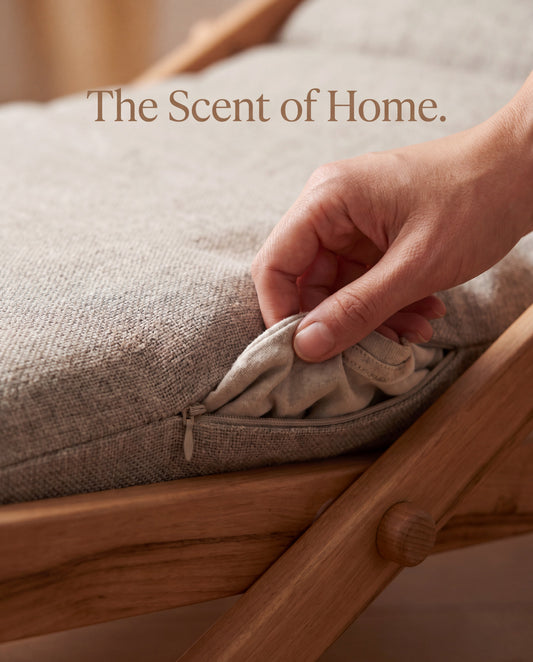
The ZenPaw Solution: We replace cold plastics with Solid Beechwood and heavy-duty Natural Hemp. These materials don't just look better; they feel better. The warm grain of the wood absorbs light rather than reflecting it, creating a "soft" visual environment that calms both the human eye and the animal spirit.
2. The Power of "Invisible" Furniture
Japandi homes are often small and focused on flow. Traditional pet gear "claims" space, often creating clutter. The solution lies in Multi-functional Design.
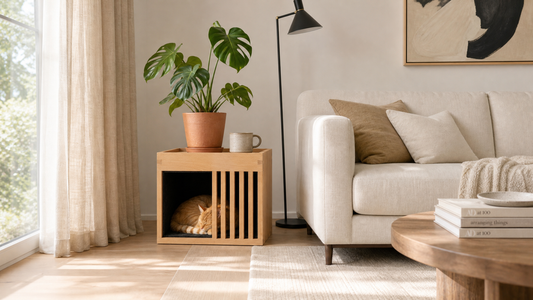
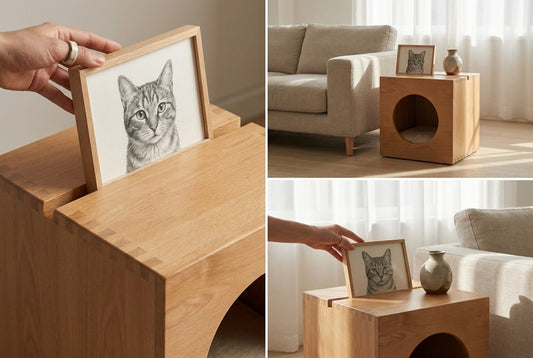
Why have a side table and a cat bed when they can be the same object? Our Horizon Side Sanctuary is designed to be the anchor of your living room. By day, it is a minimalist tray-top table for your coffee and books. Below, it provides a private, breathable retreat for your companion.
When pet gear serves a dual purpose, it stops being "clutter" and starts being "part of the home."
3. Embracing the Patina of Life
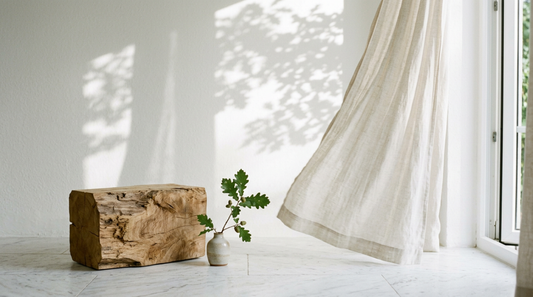
A core tenet of Wabi-sabi is the appreciation of age and use. In mass-produced furniture, a scratch is a defect. In solid wood furniture, a scratch is a story.
A ZenPaw piece is designed to gather a "patina"—the subtle darkening of the wood and the gentle wear of the edges over years of use. This makes the furniture an heirloom that records the journey of your pet’s life, eventually becoming a cherished memory for the next generation.
4. Light and Shadow: The Slatted Aesthetic
One of the most recognizable elements of Zen design is the use of wooden slats. Our slatted frames (found in the Shield Bench and Horizon Cube) aren't just for looks.
-
Function: They provide 360-degree ventilation, crucial for preventing dampness in summer.
-
Aesthetic: They create a rhythmic play of light and shadow on your floor, turning a simple pet bed into a dynamic architectural element.
Final Takeaways for a Harmonious Home
-
Stick to Earth Tones: Choose gear in beige, sand, sage, or charcoal to match a minimalist palette.
-
Prioritize Joinery: Look for pieces that use physical joints (like our Mortise and Tenon) rather than visible metal screws.
-
Quality Over Quantity: One handcrafted heirloom piece is worth more to your home’s soul than ten disposable plastic beds.
Ready to elevate your sanctuary? Explore the [ZenPaw Boutique] and find the piece that completes your Japandi home.
Q: What is Japandi style in pet furniture?
A: Japandi pet furniture combines the functional minimalism of Scandinavian design with the natural, rustic warmth of Japanese aesthetics, focusing on solid wood and clean lines.
Q: How do I hide my pet's bed in a minimalist living room?
A: Use dual-purpose furniture, such as a ZenPaw side table bed, which integrates a pet sanctuary into a high-end furniture piece.
Tags:
Previous
Stress-Free Hotel Stays: Why Your Pet Needs a "Scent-Based" Sanctuary
Next
The Empty Corner: Why We Built a Pet Sanctuary That Never Leaves Your Side